
It usually starts the same way. You notice the house never quite hits the temperature on the thermostat during a July afternoon, the system runs far longer than it used to, and your Entergy bill climbs even though nothing about your habits changed. On the Northshore, where humidity hangs heavy from May through September, a cooling system that has quietly lost efficiency is one of the most common problems homeowners face.
At Reichert Air Conditioning & Heating, we've served Mandeville, Covington, Madisonville, Hammond, and Ponchatoula since 2009. As a veteran-owned, family-run company, we've spent more than 15 years diagnosing exactly why air conditioners in this climate lose their edge. This guide breaks down the real causes, what you can safely check yourself, and when it makes sense to call a professional, no sales pitch, just straight answers.
An air conditioner loses cooling efficiency when something restricts airflow, reduces refrigerant capacity, or forces components to work harder than they should. In humid Louisiana climates, dirty coils, clogged filters, and low refrigerant are the most frequent culprits. Efficiency also declines naturally as a system ages, especially past the 12–15 year mark.
When to call a professional: If your AC runs constantly but can't hold temperature, blows warm air, freezes up, or your energy bills spike suddenly, it's time for a diagnostic. Refrigerant, electrical, and coil issues require a licensed technician.
A clogged air filter is the single most common efficiency killer we find in Mandeville homes. The filter traps dust, pet dander, and pollen, and on the Northshore, our long allergy seasons load filters faster than most homeowners expect. You'll notice weaker airflow from vents, longer run times, and rooms that never quite cool down. Why it happens: when air can't move freely across the evaporator coil, the system loses its ability to absorb heat efficiently, so it runs longer to achieve the same result. The risks go beyond high bills. Severely restricted airflow can cause the evaporator coil to freeze, and in worst cases it strains the blower motor and compressor. Local conditions make this worse, heavy tree pollen in spring and constant AC use through our humid summers mean filters here rarely last the "90 days" printed on the box. Most Northshore homes need a filter check every 30 to 45 days during peak cooling season.
Your system has two coils: the indoor evaporator coil that absorbs heat and the outdoor condenser coil that releases it. Both must stay clean to transfer heat efficiently. Homeowners notice this problem as a system that runs endlessly on hot days without cooling well, or an outdoor unit that feels unusually hot. Why it happens: the outdoor condenser sits exposed to grass clippings, oak pollen, mud, and the fine dust that Louisiana yards produce. Indoors, humidity causes the evaporator coil to stay damp, and that moisture attracts dust and even mold. A coated coil acts like a blanket, trapping heat instead of releasing it. The risks include dramatically higher run times, increased compressor wear, and eventual system failure. Our high-humidity Northshore environment accelerates coil fouling far faster than dry climates. The Department of Energy notes that dirty coils reduce a system's ability to cool and can raise energy use significantly, see their guidance on air conditioner maintenance.
Refrigerant is the fluid that carries heat out of your home. It doesn't get "used up", if levels are low, there's a leak somewhere. Homeowners notice warm or lukewarm air from vents, ice forming on the copper lines or indoor coil, and a hissing or bubbling sound near the unit. Why it happens: vibration, corrosion, and age create tiny pinholes in coils and connections. On the Northshore, salt-laden humid air can accelerate corrosion on outdoor components. The risks are serious. A system low on refrigerant can't absorb enough heat, forcing the compressor to overwork, and compressor replacement is one of the most expensive repairs an AC can need. Running low also causes the coil to freeze, which further blocks airflow. Refrigerant handling is regulated and requires EPA-certified technicians, so this is never a DIY fix. If you suspect low refrigerant, shut the system off to prevent compressor damage and schedule a professional leak diagnosis.
The capacitor gives your compressor and fan motors the jolt they need to start and keep running. The compressor is the heart of the system. When a capacitor weakens, you may hear a humming or clicking at the outdoor unit, notice the fan struggling to start, or find the system short-cycling on and off. Why it happens: Louisiana's extreme summer heat stresses capacitors, and they're among the most common parts to fail here. A tired compressor, meanwhile, loses pumping capacity gradually over years. The risks: a failing capacitor left unaddressed can burn out the compressor, turning an inexpensive fix into a major expense. An aging compressor drives run times and bills upward while cooling less. Because our cooling season is so long and demanding, components on the Northshore simply accumulate more operating hours per year than they would in cooler regions, which shortens their practical lifespan.
Even a perfectly functioning AC loses efficiency if the cooled air never reaches your rooms. Duct leaks let conditioned air escape into attics and crawlspaces before it ever hits your living space. Homeowners notice uneven temperatures between rooms, dusty air, and high bills despite a system that seems to run fine. Why it happens: connections loosen over time, tape and mastic degrade, and rodents or settling homes create gaps. In many older Northshore homes, ductwork runs through blistering attics where poor insulation lets cooled air warm up in transit. The risks include wasted energy, leaky ducts can lose 20–30% of cooled air, plus humidity and dust being drawn into the system. Louisiana attics routinely exceed 130°F in summer, so uninsulated ducts up there are fighting a losing battle. Sealing and insulating ducts is one of the most overlooked ways to restore lost efficiency.
Air conditioners lose efficiency simply as they age. A unit that cooled beautifully at ten years old may lose ground by year fifteen as components wear and older refrigerant technology becomes less efficient than modern standards. Homeowners notice steadily creeping bills, more frequent repairs, and a system that struggles on the hottest days. Why it happens: mechanical wear is cumulative, and systems sized years ago may no longer match a home that's had additions or window changes. The risks: chasing repairs on a system past its prime often costs more over time than a planned upgrade. Louisiana's punishing cooling load means our systems age harder than in milder states. According to NLR's Louisiana energy efficiency data, cooling represents a major share of home energy use in our region, so an inefficient aging unit costs Northshore homeowners more than it would almost anywhere else.
Sometimes the system is fine but the thermostat is lying to it. A miscalibrated or failing thermostat, dead batteries, or a sensor bumped out of position can cause the AC to short-cycle or run at the wrong times. Homeowners notice temperatures that don't match the display, cycles that end too soon, or a system that won't respond to setting changes. Why it happens: thermostats near lamps, kitchens, or in direct sun read the wrong temperature, and older units drift out of calibration. The risks are milder than mechanical failures but still real, poor comfort and wasted energy. This is often the easiest and least expensive cause to correct.
Safety reminder: Always switch off power at the disconnect before touching the outdoor unit. Never add refrigerant, open sealed components, or handle electrical parts yourself, these require a licensed, EPA-certified technician.
Deciding between a repair and a full replacement comes down to the age of the system, the cost of the fix, and how reliably the unit has performed.
Repair when:
Replace when:
A useful guideline many technicians reference is the "$5,000 rule": multiply the age of the system by the estimated repair cost. If the number exceeds $5,000, replacement usually makes more financial sense. For older Northshore systems working through our long cooling seasons, replacement often pays for itself in energy savings.
Costs vary based on the problem, parts, and system type. The ranges below reflect typical residential AC service and are estimates, not fixed quotes.
Factors that affect price:
Reichert Air offers a Comfort Care Maintenance Club at $120 for two visits per year, and the service call fee is waived when we're called out under a maintenance agreement. Louisiana homeowners may also find rebates worth exploring through programs like Entergy's Energy Smart.
When you call Reichert Air Conditioning & Heating for a cooling issue in Mandeville or anywhere across the Northshore, here's what to expect:
Every visit reflects the transparency and craftsmanship our veteran-owned company has been built on since 2009.
Mandeville: AC running nonstop, high bills. A homeowner near Fontainebleau called about a system that ran all day without cooling below 78°F. Our diagnostic found a severely fouled condenser coil packed with oak pollen and a clogged filter. After a thorough coil cleaning and filter replacement, the temperature split returned to normal and run times dropped noticeably within the first day.
Covington: warm air and ice on the lines. A family reported lukewarm air and frost on the copper lines of their older unit. We identified a slow refrigerant leak at a corroded connection. After repairing the leak and recharging to spec, cooling was restored and we scheduled a follow-up to confirm the system held pressure.
Madisonville: one hot room upstairs. A homeowner couldn't keep a bonus room comfortable while the rest of the house cooled fine. Inspection revealed disconnected and leaking ductwork in a 130°F attic. Sealing and re-insulating the runs eliminated the temperature gap and reduced strain on the whole system.
A sudden drop in cooling usually points to a clogged filter, dirty coils, or low refrigerant from a developing leak. Because these often appear during our peak Northshore summer, the system is already working hard when the issue surfaces. Start by checking your filter; if that doesn't help, schedule a diagnostic to check refrigerant and coils.
The $5,000 rule is a quick guideline for repair-versus-replace decisions. Multiply the system's age in years by the estimated repair cost, if the result is over $5,000, replacement is usually the smarter investment. For a 14-year-old unit needing a $400 repair, that's $5,600, which suggests it may be time to consider a new system.
Yes, air conditioners lose efficiency as they age due to component wear, coil buildup, and outdated technology. On the Northshore, our long cooling seasons put more operating hours on equipment each year, so systems here tend to decline faster than in milder climates. Regular maintenance slows this decline and preserves as much efficiency as possible.
A properly working AC typically cools a home to about 20–25 degrees below the outdoor temperature, so on a 100°F Louisiana day, an indoor temperature in the high 70s to around 80°F is realistic. If your system can't reach that range on extreme days, it may be undersized, low on refrigerant, or struggling with dirty coils.
The 3-minute rule means you should wait at least three minutes before restarting your AC after it shuts off. This lets internal pressures equalize and protects the compressor from strain. Turning the system off and back on too quickly is a common way to damage a compressor, which is one of the most costly components to replace.
Twice a year is ideal in our climate, once before cooling season and once before heating season. Given the humidity, pollen, and heavy summer use on the Northshore, biannual maintenance keeps coils clean and catches small problems early. Reichert Air's Comfort Care Maintenance Club covers two visits per year and waives the service call fee for members.
Yes, leaky or poorly insulated ducts can waste a large share of your cooled air before it reaches your rooms. In many Northshore homes, ducts run through attics that exceed 130°F in summer, so cooled air warms up in transit. Sealing and insulating ductwork is one of the most effective ways to recover lost cooling efficiency.
If your air conditioner is running hard but not keeping up with a Louisiana summer, you don't have to guess at the cause. Reichert Air Conditioning & Heating brings honest, expert diagnostics to homeowners across Mandeville, Covington, Madisonville, Hammond, and Ponchatoula, backed by more than 15 years of veteran-owned, family-run service. We'll find exactly why your system lost its edge and give you straightforward options. Call (985) 231-2174 or reach out online to schedule your AC service today, and let us restore your comfort the right way.
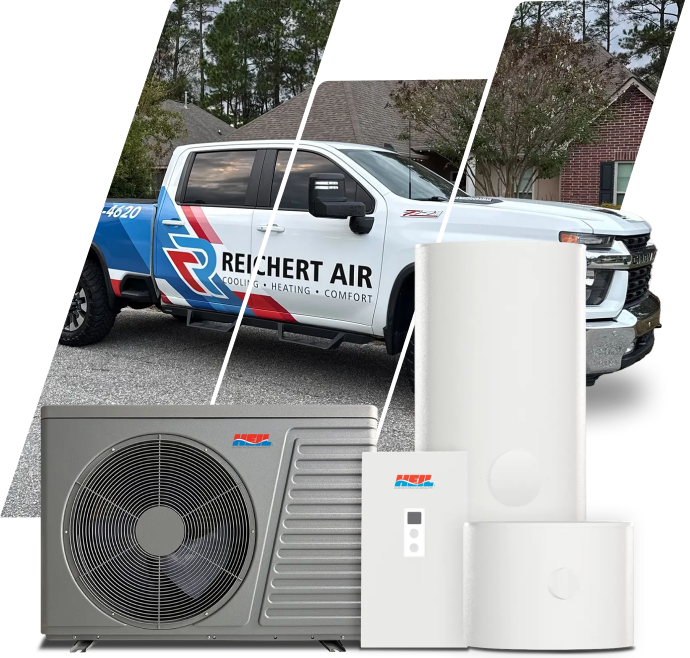
When it comes to your home's comfort, trust is everything. That's why Reichert AC and Heating is proud to be a locally owned, veteran-led company with deep roots in the Mandeville community. We've built our reputation on honesty, reliability, and doing the job right the first time. As a Heil Elite Dealer, we meet the highest standards in the HVAC industry–offering expert services backed by proven performance.
Our Comfort Care Maintenace Club also helps protect your system, improve efficiency, and maintain manufacturer warranties for lasting peace of mind. Ready for reliable, local HVAC service you can count on? Call Reichert AC and Heating today at 985-231-2174.


Whether you need a fast HVAC repair, seasonal maintenance, or a full system replacement, Reichert AC and Heating is here to help. Our trusted team delivers honest recommendations, upfront pricing, and dependable service that puts your comfort first. We make it easy to get the expert HVAC care you deserve without the stress.
Don't wait, call 985-231-2174 today or schedule your appointment online!